

When Karma Kilgore, of Mountain Brook, Ala., stepped onto the basketball court during summer travel ball; she felt ready for a breakout season. Basketball had become more than a sport for Kilgore; it was an outlet and a major part of her identity.
Just minutes into the game, everything changed. During a fast break play, a contact hit from behind caused Kilgore to fall awkwardly on the court.
“I tried to stand back up and get back into the game, but I realized my whole leg had pain racing up and down it,” said Kilgore. “An indescribable pain, but pain nonetheless, and I couldn’t stand up at first, but I managed to walk off the court without assistance.”
Kilgore and her mother turned to UAB Sports & Exercise Medicine, where she was treated by sports orthopaedic surgeon, Amit Momaya, M.D. She underwent full ACL reconstruction surgery and meniscus repair, including a Lateral Extra-Articular Iliotibial Band Tenodesis (LET) procedure. In an LET procedure, a strip of the Iliotibial (IT) band is redirected and attached along the tibia to help improve rotational instability to prevent excess rotation. This is typically done for high-risk patients, like Kilgore, to further prevent re-injury.
Like many athletes, Kilgore focused on her physical recovery. She committed herself to a full recovery, attending daily physical therapy at UAB Workplace with Ivan Iton, PT, DPT, and pushing herself to regain her strength and mobility as quickly as possible.
“I was making rapid progress and hitting my physical markers much faster than I expected,” Kilgore said. “I was working so hard to get back on the court.”
While her physical recovery made good progress, the emotional tole of the injury became increasingly difficult to process. Watching other teammates play and compete while she remained sidelined tested her confidence and identity as an athlete.
“Watching my teammates play the game I love so much from the bench was torture.”
As recovery continued, the pressure she placed on herself grew heavier. Six months after her injury, intense rehabilitation effort led to the buildup of scar tissue, requiring a second surgery. Although the procedure helped physically, returning to basketball still proved mentally challenging.
After being cleared to play again during high school tryouts, she expected to start with her team at the level she once played before. Instead, she struggled with her confidence, trying to adjust to the speed of varsity play and cope with the frustration of not feeling like herself on the court.
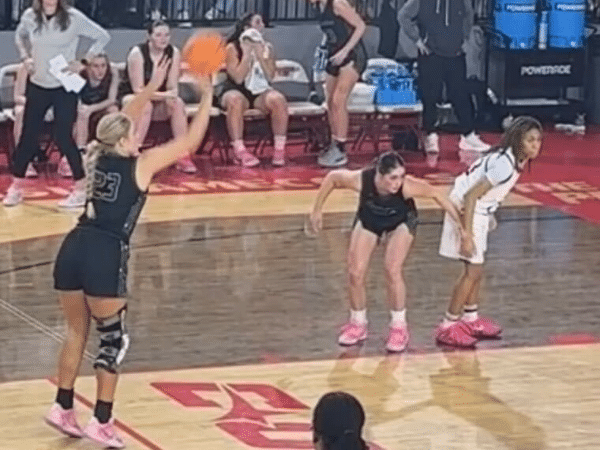
“I was embarrassed that I walked up with so much confidence and left with so little… The whole day was failure after failure after failure.”
Kilgore’s frustration became so overwhelming that she even considered quitting basketball, but the support from her family, teammates, coaches, and UAB care team helped her continue moving forward. Rather than giving up, she committed once again to herself that she needed to finish the process. Kilgore showed up to every practice, every workout, and every opportunity to improve.
Over time, her perspective on recovery began to shift. Instead of focusing only on proving herself to others, Kilgore learned to appreciate the growth that came through her hardship.
“I’ve learned that when faced with adversity, I do not quit,” said Kilgore. “Basketball, for me, was never just about putting a ball through a hoop, but instead it has been one of my life’s most influential teachers.”
Kilgore recently completed her ninth-grade season on the varsity team at Mountain Brook High School and received “Outstanding Female Athlete of the Year” Award for her grade.
Today, her journey serves as a reminder that recovery is about far more than returning to play. Through expert medical care, structured rehabilitation plans, and emotional support, UAB Sports & Exercise Medicine helps athletes navigate every stage of recovery, both physically and mentally.