
Studies show that a sedentary lifestyle, characterized by long periods of sitting or lying down, can increase a person’s chances of heart disease — even among individuals who get the recommended amount of exercise each week. Alabama leads the nation in physical inactivity with 30.7 percent of adults in Alabama reporting no physical activity outside of work. Experts in the University of Alabama at Birmingham Division of Cardiovascular Disease say there are many steps people can take to minimize the impacts of a sedentary lifestyle on heart health.
Desk exercises
Elizabeth Jackson, M.D., a cardiologist at the UAB Cardiovascular Institute, recommends taking short opportunities to move throughout the day. This could look like standing up to stretch every couple of hours, taking the stairs instead of the elevator or walking to a co-worker’s office to ask a question rather than messaging them.
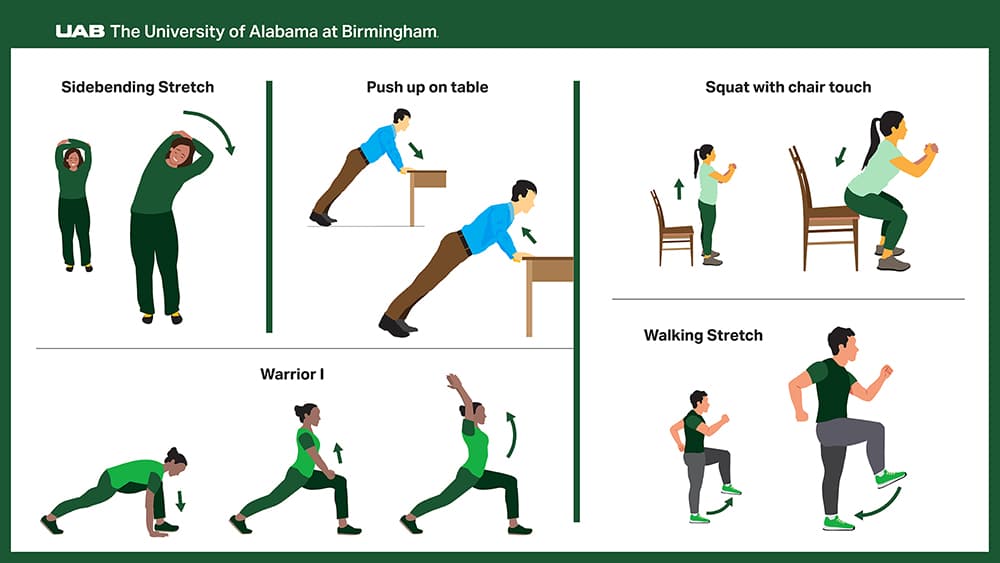
Brian Riddle, DPT, director of Physical Therapy for UAB Sports and Exercise Medicine, says there are many exercises that can be done safely in an office or at a desk. Some recommendations include:
- Walking march
- Begin in a standing upright position with both elbows bent at 90 degree angles.
- March slowly forward, lifting one leg to a 90 degree angle, bringing the arm on the same side backward, and opposite arm forward.
- Warrior I
- Begin standing tall with your feet together and your belly button pulled in.
- Step into a lunge position with your front leg bent and your back leg straight. Bring your hands to your thigh and then reach both arms up to the sky. Hold this position as if you are a strong warrior.
- Squat with chair touch
- Begin by standing in front of a chair.
- Lower yourself into a squatting position, bending at your hips and knees, until you lightly touch the chair. Return to the starting position and repeat.
- Side bending stretch
- Begin in a standing upright position with your arms crossed behind your head and one hand holding on to the outside of your elbow.
- Slowly lean toward the side opposite your supported elbow until you feel a stretch, and hold.
- Table push-up
- Begin in a standing position next to a table or bed, leaning onto straightened arms for support.
- Bend your elbows, slowly lowering yourself into a push-up position, then push your body back up away from the table and repeat.
If incorporating movement throughout the day seems intimidating at first, Jackson recommends individuals start small and work their way up. This may mean standing for one work call each day at first and slowly working up. As these habits become easier, continue to build upon them each day.
Walking
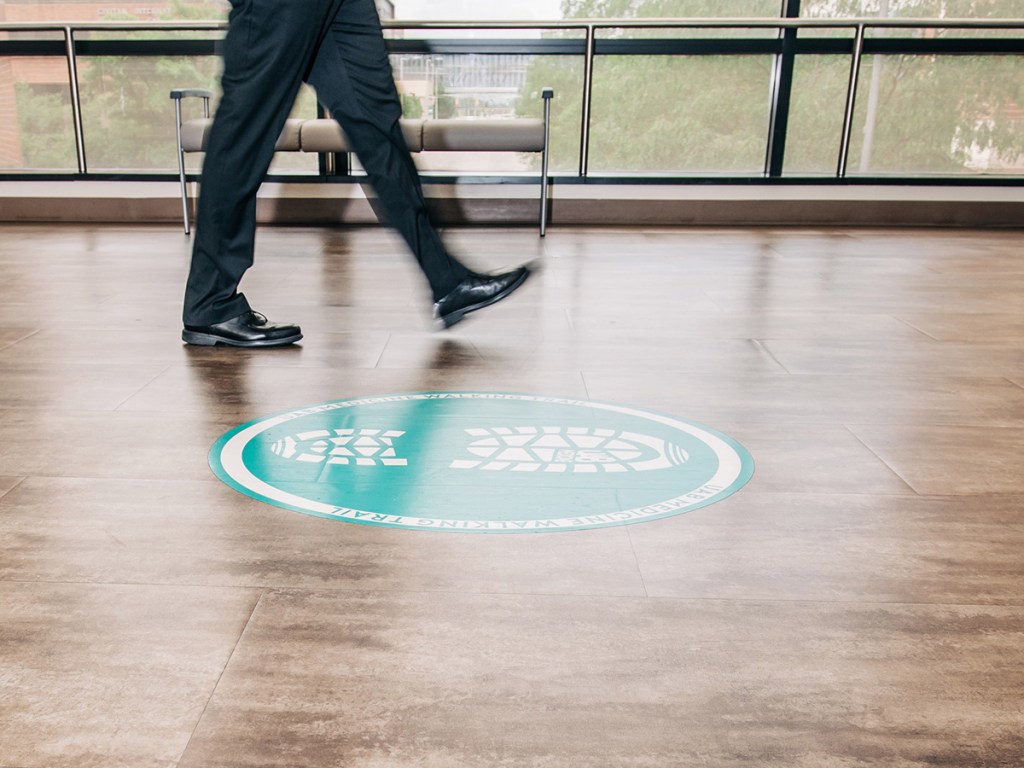
For meetings that involve two or three people and do not require being behind an electronic device or reading papers, consider a walking meeting. Discuss this type of meeting ahead of time, so attendees are prepared with the right footwear. Take notes during the meeting using a mobile phone or small notebook.
Walking meetings may not be a good choice for people in some professions; therefore, Jackson recommends finding small breaks to incorporate walking throughout the day. This could mean taking the stairs instead of the elevator, taking a short break to take a lap around the office, or using longer breaks to stroll outdoors in a parking lot or down the street. Biking to work or using public transportation allows individuals to add movement into their day.
Every movement, big or small, can help people work toward the 150 minutes of exercise a week that is recommended by the American Heart Association.
“Physical activity does not always mean that you have to go to a gym,” Jackson said. “Start out with a 10-minute walk, or choose to park a little farther away from the entrance of your workplace. Maybe the next week, you try to get two 10-minute walks of exercise in a day and just continue to gradually work your way up to where you are getting the recommended 150 minutes a week.”
Heart-healthy nutrition
While trying to incorporate movement into the workday, Gretchen Wells, M.D., Ph.D., director of the UAB Medicine Women’s Heart Health Program, says eating heart-healthy meals and snacks can aid in heart disease prevention.
“With heart disease prevention, small changes can make a huge difference,” Wells said. “Food and exercise are medicine, and everyone can benefit from eating healthier and getting exercise.”
While people may be tempted to eat out for lunch during the weekday, cooking at home can help maintain a healthy and balanced diet since it allows for more control over the ingredients used in the dish. Jackson and Wells say eating fruits and vegetables, complex carbs, and plant-based proteins, limiting red meat, and controlling portion sizes are the best ways to start eating for health. Incorporating these behaviors into at least one day of eating a week can benefit overall health.
“Make sure your plate is colorful as different colored vegetables contain different nutrients,” Jackson said. “Vegetables such as carrots contain completely different nutrients than kale, so by trying to incorporate different color patterns into your meals, you can provide your body with a range of nutrients that it needs.”
Throughout the day, choose heart-healthy snacks such as fruit or veggies, low-fat cheese, and nuts, and stay hydrated by drinking water.
While sedentary and sitting behavior in office workplaces is a risk factor for cardiovascular disease, taking steps such as moving throughout the day and eating a heart-healthy diet can help mitigate the risk.