
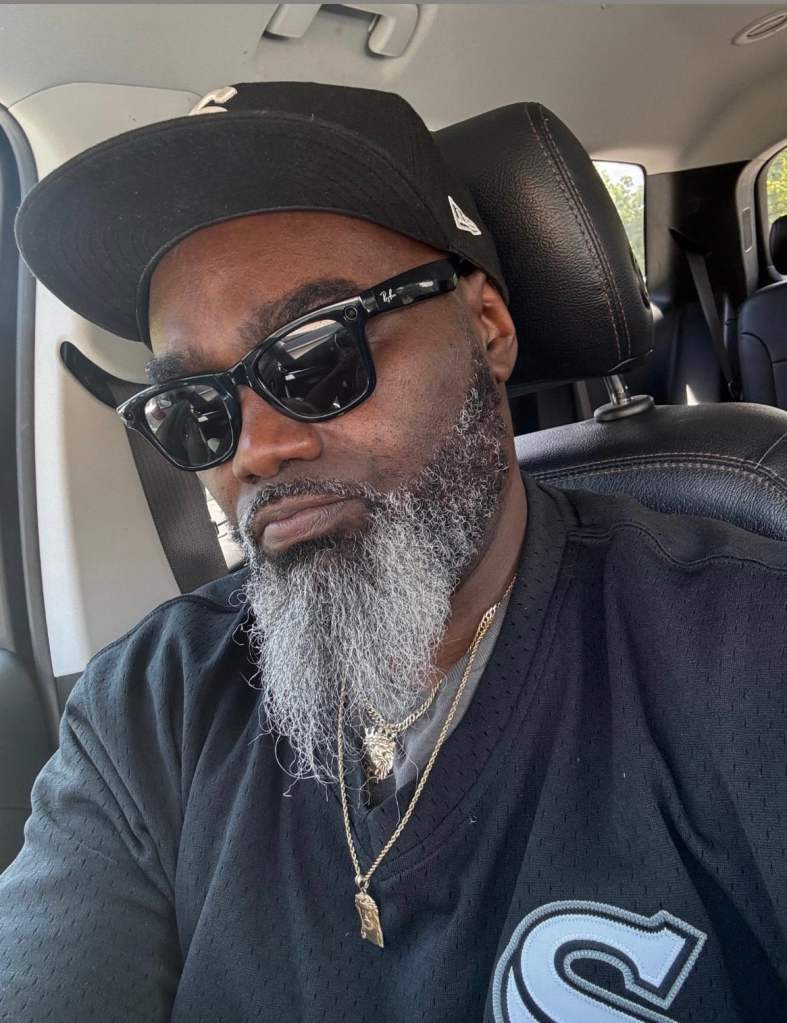
In early 2024, Wayne Jones was driving his truck home from a friend’s retirement party. What seemed like a moment later, he woke up in a hospital bed, woozy and questioning reality. He couldn’t move his legs and didn’t know where he was.
Jones, 47, had been thrown from his truck after it rolled off an overpass bridge, causing a traumatic spinal cord injury. But he also had several advantages that would help him regain independence in the following months: a dedicated rehabilitation center, a supportive family, and a determined spirit. That spirit is evident in the various phases of Jones’ care at UAB Spain Rehabilitation Center, as highlighted below.
Acute care phase
“I didn’t even know I had had a wreck – I was just trying to figure out what was going on,” Jones said. “I couldn’t move my legs at all.”
He had a T11 spinal cord injury, a fracture that often causes lower-body motor and sensory issues as well as bladder and bowel problems. His acute care included stabilization, treatment, and preparation for recovery, and he underwent spinal fusion surgery on the affected area.
In the coming week, acute care physical and occupational therapists evaluated his strength, balance, and ability to tolerate various activities. The acute therapy team assessed the level of assistance he needed to perform important transfers from the wheelchair to the bed, shower bench, and toilet. They also evaluated how well he could perform basic functions, such as rolling in bed and dressing, to help prepare him for his continued recovery in the inpatient rehab setting.
According to Chris Anderson, one of his acute care occupational therapists, Jones showed tremendous upper body strength. And his upbeat attitude helped him progress quickly to inpatient rehabilitation after just one week.
A husband and father of four, Jones recalls, “I just thought about my family and was wondering how I’d play my part in their lives – that was it. When I found out I was going on to rehab, I was like, ‘Okay, it’s time to get to work, let’s do it.’”
Inpatient phase
For patients who are medically ready and strong enough for therapy, inpatient rehab helps them regain the ability to function at home safely. At UAB Medicine, this takes place at Spain Rehabilitation Center, commonly known as Spain Rehab.
Spain Rehab’s services are guided by physiatrists – doctors who specialize in physical medicine and rehabilitation. They coordinate physical, occupational, speech, and other types of therapies to help ensure maximum recovery. Inpatient rehab can last from days to months; Jones spent a month in the facility.
While there, he worked with a physical therapist and occupational therapist twice a day, five days a week. His progress was reviewed weekly by his therapists and other members of his care team, including the attending physician and nurses.
Jones knew he was lucky, but he also recognized that he was starting from scratch in many ways.
“I had to learn how to get out of bed, how to get dressed, and how to get in a wheelchair. Everything was new – from brushing my teeth to cooking from the chair,” he said. “They push you and keep you moving to make sure you’re ready for home.”
Jones’ care team gave him a temporary wheelchair and assessed his needs and preferences during his stay. He was fitted for a custom model closer to discharge.
Caroline Kidd, Jones’ inpatient occupational therapist, says his sessions with her focused on the most important skills for living at home – from hygiene and grooming to dressing and transfers. She says his attitude was helpful in overcoming the physical and psychological challenges of rehab.
“He was upbeat, and even after setbacks he came in focused on overcoming the next challenge,” Kidd said. “Wayne was open to feedback and willing to try new strategies – something we don’t always see.”
Jones’ therapists helped him take advantage of his upper body strength to progress from using assistive devices, such as slide boards and thigh straps, to being able to safely support his own weight.
“I think one of the reasons he did so well was because he had a purpose,” Kidd said. “You could tell that his family was a big motivator for him.”
Hoops made a difference
During his rehab stay, Jones told his care team that he was a sports fan and former athlete and that his son played recreation league basketball. So, when Kidd thought he was ready, she took him to the Spain Rehab basketball court. Being able to play basketball gave him hope that he could still do the things he loved – not just the basics.
“That was a big moment for me,” Jones recalled. “I hadn’t played ball in years, and here I was doing it in a wheelchair! It made me feel like I was getting back to myself.”
Basketball became something he looked forward to and even shared with his children over the next several weeks. “By the end of the month, I felt ready,” Jones said. “I could get in and out of bed, transfer to the chair, and do most things without help. I knew I could make it at home.”
Meanwhile, his family and church community had been preparing his home with ramps and accessibility upgrades to make life easier once he returned. Also, Jones’ wife and children took part in therapy sessions to learn how to assist him when needed.
“I was excited but also nervous,” Jones said of returning home. “It’s different when you don’t have the nurses and therapists right there, but they made sure I had what I needed.”
Outpatient phase
Once home, Jones began regular outpatient visits to Spain Rehab to work with a team that included Barry White, a physical therapist. Outpatient rehab often begins with weekly or bi-weekly sessions and later becomes more like an ongoing check-in to guide progress and address challenges as they came up. The hardest work often happens at home.
White describes his approach to physical therapy: “We usually think in order of navigating the house, making sure there is family and support where needed, and looking at how to get patients involved in their community and sources of joy.”
Therapy exercises are focused on meaningful, specific results, White says: “Wayne and I talk about making it possible to go to the places and do the things that matter to him.”
Today, with just over a year of outpatient rehab behind him, Jones is learning to drive again, working out at Lakeshore Foundation’s accessible gym, and practicing assisted walking to build lower-body strength. He’s been going to his son’s travel basketball games, and he was delighted to attend his oldest daughter’s recent graduation.
“As long as I can keep getting stronger and doing more, I feel like I’m getting my life back,” Jones said. “I’m not stopping – I’ve got too much I still want to do.”
Learn more about UAB Spain Rehabilitation Center.