
Uterine fibroid embolization, or uterine artery embolization (also known as UFE or UAE), is a procedure that blocks the blood flow to a fibroid tumor to kill it. A fibroid tumor is a noncancerous (benign) growth that starts in the smooth muscle layer and connective tissue of the uterus (womb). It is a minimally invasive procedure, which means that only small incisions (cuts) are needed, allowing for faster recovery with fewer complications in most cases compared to traditional open surgery.
A thin tube called a catheter is inserted in the body through an incision in the groin, then it is pushed into the uterine artery, where tiny particles are injected to stop blood flow to the fibroid. As the fibroids die and begin to shrink, the uterus fully recovers. The procedure is performed by a specially trained physician known as an interventional radiologist, and it’s done in a room called an angiosuite. A high-definition X-ray camera is used to help guide the catheter into the uterine artery. Patients receive either sedative medication or general anesthesia. Most patients are able to return to work within 1-2 weeks.
Why choose UAB Medicine
Interventional radiology is a medical specialty that uses minimally invasive techniques to diagnose and treat a wide range of health problems, and it is an important part of complete patient care. The UAB lnterventional Radiology team is a group of skilled, experienced health care professionals who are dedicated to providing high-quality patient care.
This group uses the most advanced technology and imaging methods, including fluoroscopy, ultrasound, and CT scans. UAB Medicine has five angiosuites, and each is equipped with the latest imaging systems needed for complex procedures, along with cutting-edge patient monitoring systems. UAB Medicine is an academic medical center that conducts clinical research trials, so patients may have access to promising new treatments not available elsewhere.
Care Providers


Videos
 Expanding the Donor Pool: The Rise of DCD Heart Transplantation and Advances in Organ PreservationListenCME/CE0.25Minutes26Close
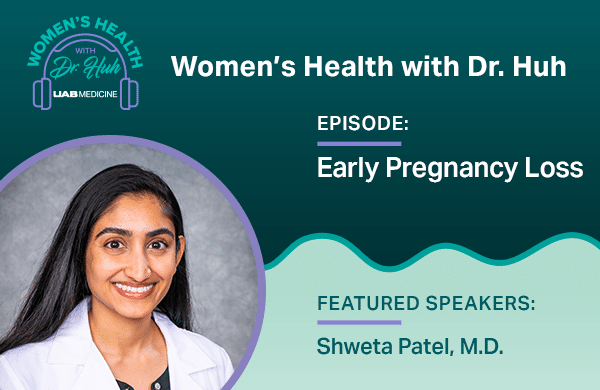 Women’s Health with Dr. Huh: Early Pregnancy LossDr. Huh is joined by Shweta Patel, M.D., an obstetrician, to share little-known facts about early pregnancy loss that can help patients understand this emotional experience.ListenClose
 Close
Close The Role of a Rehabilitation Psychologist on an Interdisciplinary Rehab TeamListenCME/CE0.25Minutes13Close
Resources
- Uterine Fibroid Embolization – For Patients
- Department of Obstetrics and Gynecology
- UAB Department of Radiology
- Uterine Artery Embolization
Related Specialties
Clinical Trials
Speak to your physician about your options and browse the link below for more information



Latest News
View All News-
UAB clinical trial explores new approach to treat ovarian cancer
September 21, 2026
-
What to know about incontinence in women, according to UAB experts
July 1, 2026
-
Researchers awarded $8M grant to study long-term impact of Type 2 diabetes treatment for pregnant patients and their children
June 25, 2026
-
Women’s health misconceptions addressed by a UAB OB/GYN
June 16, 2026
-
Magnesium sulfate does not improve neurodevelopmental outcomes in very early preterm births, according to new UAB analysis
April 23, 2026