
A small percentage of women who have never had diabetes develop high blood sugar during pregnancy. When blood sugar (glucose) levels are high enough, this is diagnosed as gestational diabetes. During pregnancy, hormones created in the placenta to help the baby receive nutrients cause the woman’s pancreas to work harder to produce insulin, which regulates blood sugar. In a normal pregnancy, a woman’s pancreas may produce as much as three times the usual amount of insulin. If the pancreas does not make enough insulin, glucose can build up to high levels in the blood. Glucose testing in the first or second trimester of pregnancy can detect gestational diabetes. It typically can be treated with diet, exercise, or medication. Gestational diabetes usually goes away after delivery but can increase a woman’s risk of developing type 2 diabetes.
Why choose UAB Medicine
UAB Obstetrics and Gynecology offers complete women’s health care, delivered by physicians and nurses dedicated to excellence. Our physicians are nationally recognized specialists in their fields, so you can rest assured that you are receiving the most advanced care available. Our program is consistently ranked among the best of its kind in the country by U.S. News & World Report.
As part of the UAB Division of Women’s Reproductive Healthcare, UAB Obstetrics and Gynecology’s services range from complete obstetric care to the medical and surgical treatment of complex gynecological concerns. Because UAB Medicine is a major center for research, patients may have access to promising new techniques and treatments not available at other medical centers. Our physicians are here for you at every stage of life, from your first gynecological exam to delivering your baby and helping guide you through menopause.
The Maternal-Fetal Medicine (MFM) specialists at the UAB Women & Infants Center are available on site 24/7 to manage problems with high-risk pregnancies. Our physicians are experts at managing conditions such as diabetes, high blood pressure, multiple births, and premature delivery.
UAB Medicine’s MFM program is among the most advanced in the nation, and we are one of only 14 medical centers that participates in the national Maternal-Fetal Medicine Units Network for high-risk pregnancy research. Because UAB is a major center for research, patients may have access to new treatments that are not available elsewhere. For mothers who’ve had a preterm birth before, these treatments can reduce their chance of having another preterm birth by one-third to one-half.
UAB provides the most advanced MFM care, including first-trimester diagnosis, genetic testing and counseling, and 4D-ultrasound and fetal imaging. All of our MFM specialists are board-certified, and our team also includes certified genetics specialists.
Care Providers
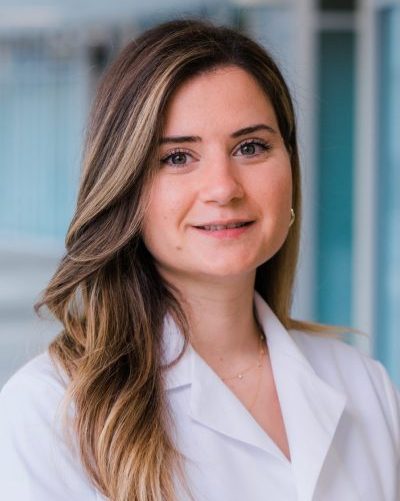 Basma Abdulhadi, MD
Endocrinology
Basma Abdulhadi, MD
Endocrinology
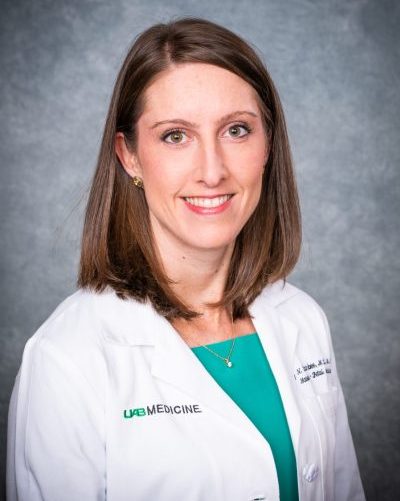 Ashley Battarbee, MD
Maternal and Fetal Medicine, Obstetrics and Gynecology
Ashley Battarbee, MD
Maternal and Fetal Medicine, Obstetrics and Gynecology
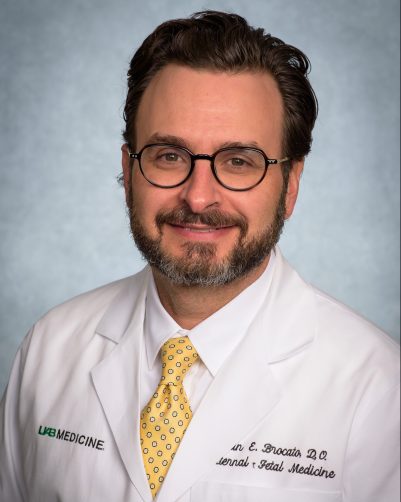 Brian Brocato, DO
Maternal and Fetal Medicine
Brian Brocato, DO
Maternal and Fetal Medicine
 Alice Goepfert, MD
Maternal and Fetal Medicine, Obstetrics and Gynecology
Alice Goepfert, MD
Maternal and Fetal Medicine, Obstetrics and Gynecology
 Alan Tita, MD, PhD
Maternal and Fetal Medicine, Obstetrics and Gynecology
Alan Tita, MD, PhD
Maternal and Fetal Medicine, Obstetrics and Gynecology
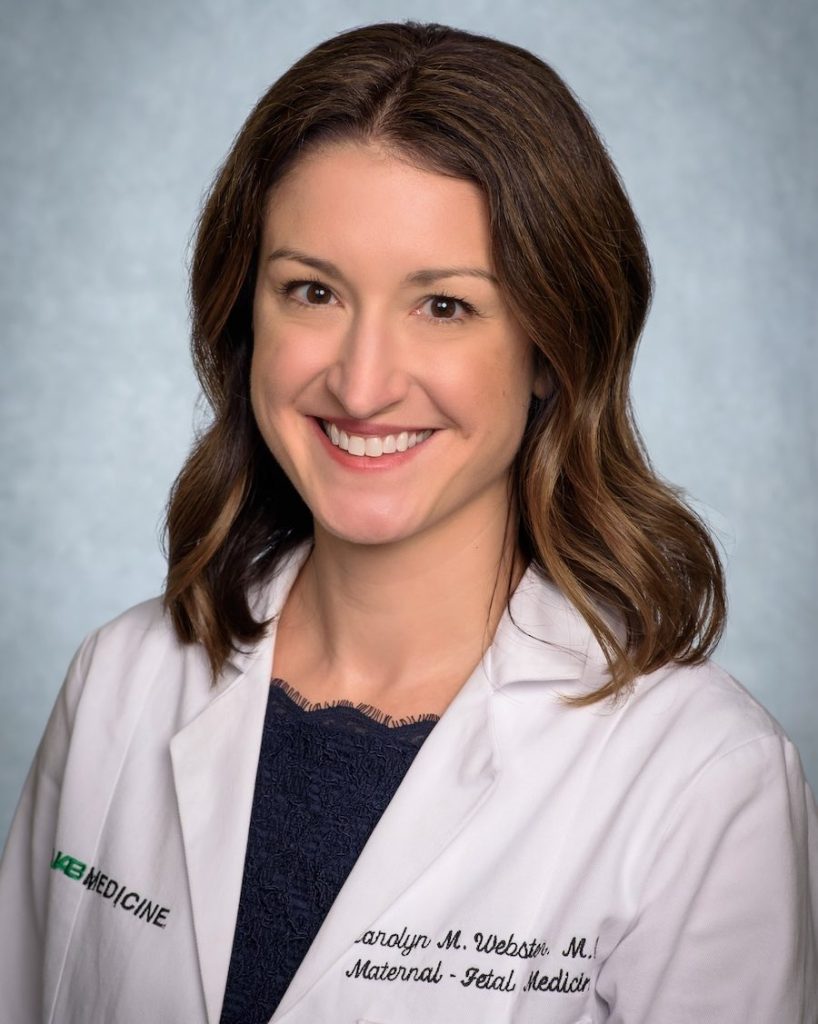 Carolyn Webster, MD
Maternal and Fetal Medicine
Carolyn Webster, MD
Maternal and Fetal Medicine
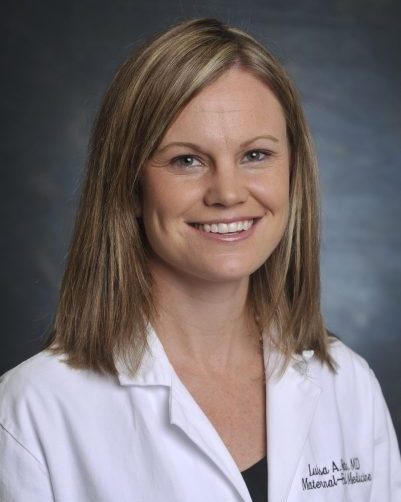 Luisa Wetta, MD
Maternal and Fetal Medicine, Obstetrics and Gynecology
Luisa Wetta, MD
Maternal and Fetal Medicine, Obstetrics and Gynecology
Videos
 Expanding the Donor Pool: The Rise of DCD Heart Transplantation and Advances in Organ PreservationListenCME/CE0.25Minutes26Close
 Women’s Health with Dr. Huh: Early Pregnancy LossDr. Huh is joined by Shweta Patel, M.D., an obstetrician, to share little-known facts about early pregnancy loss that can help patients understand this emotional experience.ListenClose
 Close
Close The Role of a Rehabilitation Psychologist on an Interdisciplinary Rehab TeamListenCME/CE0.25Minutes13Close
 Labor & Delivery TourView this video that walks you through what to expect when you come in for labor.WatchClose
Resources
Related Specialties
Clinical Trials
Speak to your physician about your options and browse the link below for more information


Latest News
View All News-
UAB and global partners awarded landmark NIH grant to combat a leading cause of maternal mortality
October 15, 2026
-
What should I include in my birth plan?
October 6, 2026
-
UAB clinical trial explores new approach to treat ovarian cancer
September 21, 2026
-
What to know about incontinence in women, according to UAB experts
July 1, 2026
-
Researchers awarded $8M grant to study long-term impact of Type 2 diabetes treatment for pregnant patients and their children
June 25, 2026