
UAB Medicine leads the way in health care that improves and saves lives – sometimes in ways you can touch, hold, and burp.
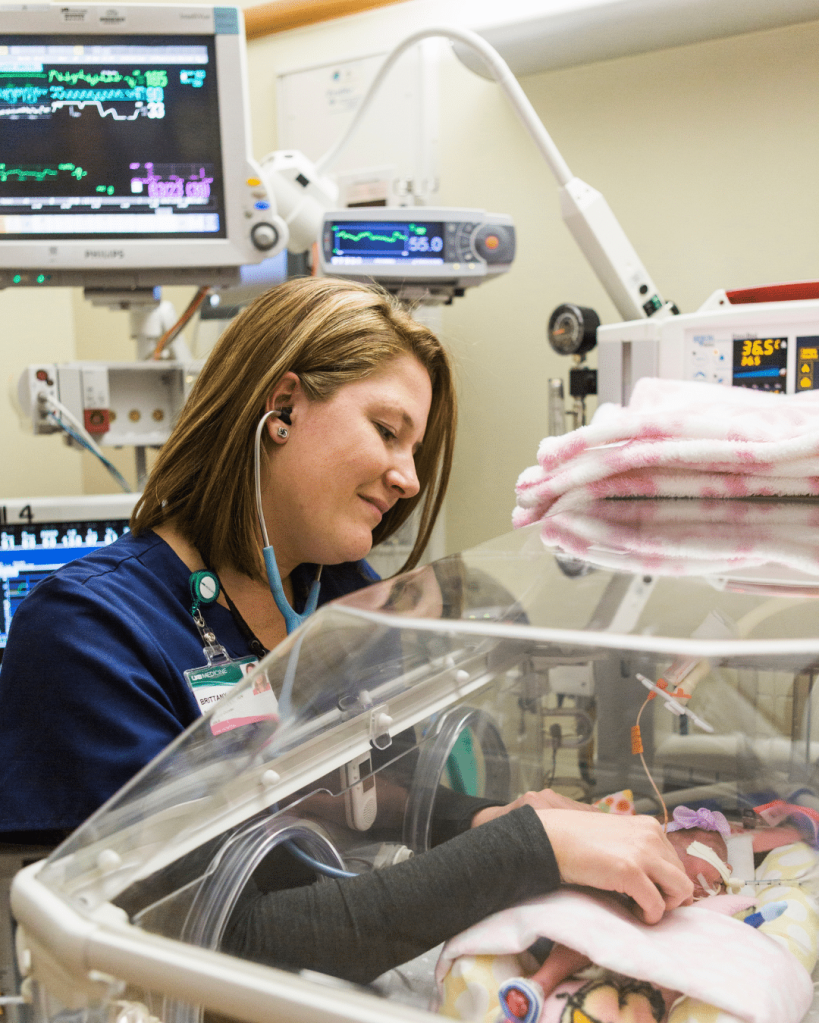
In the UAB Regional Newborn Intensive Care Unit (RNICU), some premature babies owe their future to an innovative program born here called Golden Week. November marks the 10th anniversary of Golden Week, as well as being Prematurity Awareness Month.
Reducing risk
Launched in 2015, Golden Week is a highly structured care model designed to reduce the high risk of death and major complications among infants born before 28 weeks of development. It was created by Drs. Charitharth Lal and Colm Travers, along with a group of neonatal nurses at the UAB Women & Infants Center (WIC). It’s based on years of research and best practices.
“Extremely premature infants are highly vulnerable, and even small clinical changes can lead to life-threatening complications,” said Dr. Travers, who now helps lead the program. “Golden Week was developed to give those babies their best chance in the first days after birth, and it continues to grow because of the commitment of everyone involved.”
One of the most serious risks for these infants is intraventricular hemorrhage (IVH), or bleeding in the brain caused by fragile, underdeveloped blood vessels. Relatively small changes in breathing, temperature, or blood pressure can trigger a rupture. IVH is a common cause of early death among newborns and a leading factor in long-term disability.
By tightly controlling the care during this critical first week of life, the specially trained Golden Week team has helped give these preemies a fighting chance. At UAB Medicine, the program has contributed to a 30% drop in the combined risk for death or severe IVH within the first week after birth.
More consistent care
When a birth is expected before 28 weeks, Golden Week staff are immediately mobilized and briefed. The Neonatology team works closely with Labor and Delivery to maximize the chance of survival even before birth, providing important treatments when needed.
“We make sure that every baby receives the same level of care, regardless of who is working that day,” Dr. Travers said. “That’s why we invest so heavily in training, review, and consistency.”
In the three distinct phases of Golden Week care, nurses and physicians follow sets of orders that address breathing support, temperature regulation, fluid and nutrition, infection prevention, and more. Phase 1 involves the first hour of life, phase 2 spans the first 72 hours, and phase 3 includes days 4-7 after delivery.
Families receive printed handouts and verbal education before and after delivery to help them understand what the care team is doing in each phase and why. A March of Dimes family liaison and the Neonatology team help guide and support parents during this emotional time.
Sharing the success
Over its 10-year history, the Golden Week program has earned widespread respect and was even trademarked. It has been adopted by or shared with major neonatal centers nationally and internationally, and its successes have been detailed in Pediatrics, a leading medical journal published by the American Academy of Pediatrics.
In 2017, the program earned a Gage Award honorable mention for improving health care quality. It even helped lead to two Guinness World Records: one in 2021 for the most premature surviving infant at the time, and another in 2025 for the most premature quadruplets to survive delivery.
UAB Medicine’s Golden Week Committee meets monthly to review and learn from each case. Neonatologists, nurses, respiratory therapists, and other RNICU team members work together to identify trends, refine best practices, and ensure that the program continues to evolve.
“There’s a reason that hospitals across the country are asking about our methods,” Dr. Travers said. “It’s because of the results our nurses and providers help achieve day after day, and the thoughtfulness behind every part of the program.”
Learn more about the Regional Newborn Intensive Care Unit at the UAB Women & Infants Center.