
As kidney transplant wait times continue to grow nationwide, the University of Alabama at Birmingham is expanding access to life-sustaining transplants by adopting normothermic machine perfusion performed by 34 Lives, an advanced organ preservation technology shown to improve organ utilization and early transplant outcomes.
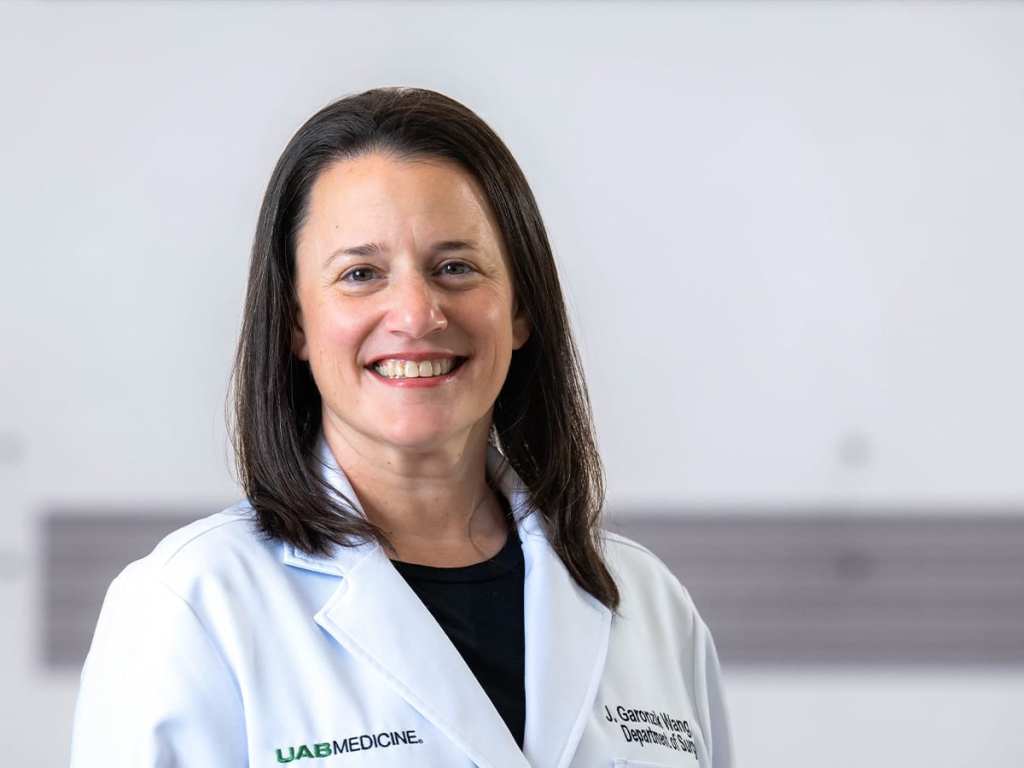
“This technology meaningfully improves the way we assess and utilize donor kidneys — particularly those that are suitable for transplant but might otherwise go unused,” said Jaqueline Garonzik Wang, M.D., division director of Transplantation and co-director of the UAB Comprehensive Transplant Institute. “By adopting this technology, we are positioning UAB to offer more patients a timely and safe transplant.”
Improving outcomes and expanding access
For patients, the use of NMP may mean receiving a kidney transplant sooner — often while they are healthier — and having greater confidence in early graft function.
“What this program has done is give us the ability to use kidneys that would potentially have gone without being transplanted,” said Douglas Anderson, M.D., associate professor in the Division of Transplantation, who performed the first NMP-kidney transplant at UAB. “That is significant for our patients who benefit from receiving a transplant and for the donor families whose generosity can now be fully realized.”
By improving the ability to safely assess and preserve donor organs, NMP helps make more kidneys suitable for transplantation. This can shorten wait times, reduce the amount of time patients spend on dialysis, and improve the overall transplant experience by increasing the likelihood that the kidney functions immediately after surgery and reducing the risk of early complications.
According to Garonzik Wang, NMP allows transplant teams to evaluate kidney function in real time prior to transplantation. While on NMP, clinicians can closely monitor blood flow, kidney resistance and metabolic activity and in many cases observe urine production.
“This helps us make more informed decisions about organ suitability,” Garonzik Wang said.
While the initial intent of NMP was to enhance organ assessment, emerging evidence suggests it may also provide additional benefits to donor kidneys. Key findings from an analysis of the first 100 kidney transplants in the United States utilizing NMP — recently published by Garonzik Wang and colleagues — compared outcomes with those of similarly matched kidneys preserved using traditional methods.
NMP was shown to keep donor kidneys healthy before surgery and reduced the risk of the kidney’s failing to work right away by 40 percent.
For patients, a reduction in delayed graft function may translate into a smoother immediate postoperative course and a faster return to normal kidney function. Although the biological mechanisms underlying these benefits are not yet fully understood, ongoing research is exploring how NMP may reduce ischemia–reperfusion injury and support improved early graft performance.
“We are focused on delivering excellent clinical care today, alongside advancing the field for the future,” Garonzik Wang said.
A shift from traditional kidney preservation
For more than 50 years, donor kidneys have typically been preserved using cold storage, which involves flushing the kidney to remove donor blood, cooling it in a preservation solution at approximately 4 C, and storing it on ice while arrangements are made for transplantation. Using this method, donor kidneys are generally viable for 24 to 36 hours.
Normothermic machine perfusion offers a more physiological approach by maintaining organs at near body temperature in an oxygen- and nutrient-rich environment. During NMP, a mechanical pump circulates a warm solution — designed to deliver oxygen and nutrients—through the kidney. This allows the transplant team to observe kidney function directly and assess clinical markers such as urine production prior to transplant.
“This allows us, for the first time, to assess how a kidney is likely to function after it has been recovered from the donor,” Garonzik Wang said. “That information gives us greater confidence when moving forward with transplantation, particularly for kidneys that may previously have been considered higher risk.”
UAB’s adoption of normothermic machine perfusion reflects the institution’s ongoing commitment to advancing transplant innovation while expanding access to high-quality, patient-centered care.