
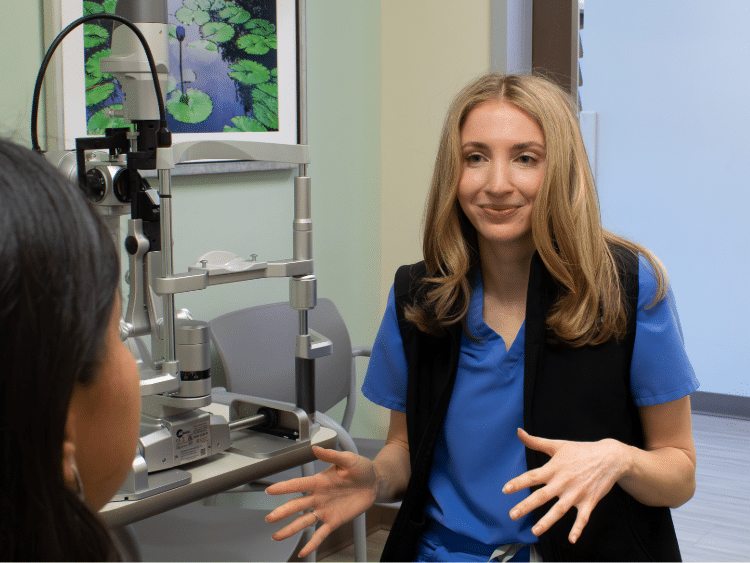
Women’s eye health can change over time due to age, hormones, and everyday habits. Understanding these risks and taking simple steps to protect your eyes can help preserve your vision for years to come. We spoke with Dr. Erin McGahey, an optometrist at UAB Callahan Eye, about what women should know and how they can take action.
Why women are at higher risk of vision conditions
“Women tend to have a higher risk for eye conditions that cause visual impairment for a variety of reasons,” said McGahey. Women also tend to live longer, which increases the chance of developing age-related conditions such as:
Hormonal changes can also affect eye health. These changes may happen during pregnancy, while using birth control, or during menopause. Common hormone-related eye changes include:
- Pregnancy can lead to dry eyes, blurry vision, and skin changes around the eyes; report any vision changes to your doctor
- Hormonal birth control increases risk of dry eye, especially with estrogen and progestin-based pills
- Menopause lowers estrogen levels which may increase the risk of macular disease and weaken eye health over time
Beauty and skincare products
Some beauty products can affect eye health. Mascara and eyeliner can block oil glands in the eyelids, which may lead to dry eye over time. Eyelash extensions can also cause problems, including allergic reactions or infections if not applied or cleaned properly.
“Be wary of eyelash growth serums,” said McGahey. “Choose products that do not contain prostaglandins.” While these ingredients can help lashes grow, they may also worsen dark circles and cause loss of fat around the eyes, she says.
Prevention and protection
McGahey recommends several simple habits to help protect your vision:
- Wear UV protection to protect the eye from the sun’s damaging rays
- Avoid smoking to prevent inflammation and oxidative stress
- Eat leafy green vegetables to promote overall eye health
“Kale and spinach contain lutein and zeaxanthin, important antioxidants that are great for maintaining macular health,” said McGahey.
When to book an exam
Yearly eye exams with dilation are recommended to monitor ocular and systemic health.
“Many systemic diseases can manifest in the eye, so early detection and prompt treatment can help preserve vision and keep patients healthy overall,” McGahey said.

About Dr. Erin McGahey
Dr. Erin McGahey is an optometrist specializing in ocular disease management and low vision rehabilitation. She earned her Doctor of Optometry degree at the University of Alabama at Birmingham School of Optometry and completed her residency at the Birmingham Veterans Affairs Medical Center.
She is dedicated to delivering compassionate, patient-centered eye care and sees patients at our downtown, Gardendale, and Trussville locations.