
A Parkinson’s disease diagnosis changes a person’s life forever. But the path of the condition varies, and some aspects of the journey can be controlled.
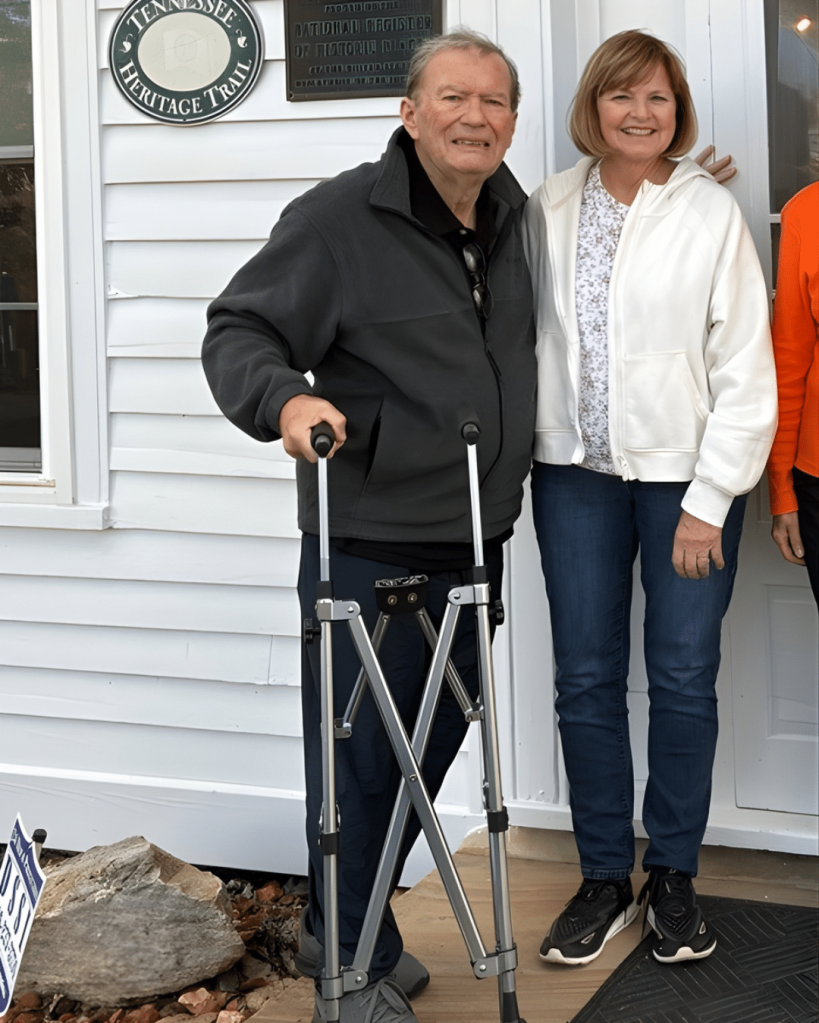
Larry Fite, M.D., a graduate of the UAB Heersink School of Medicine, was a full-time physician in North Alabama when he was diagnosed nearly 20 years ago. He took a proactive approach to managing the disease and found opportunities to regain lost abilities, explore medications and treatments, try various assistive devices, and maintain social connections. Even as his condition progressed, Dr. Fite has found a way to keep living a life that he loves.
The diagnosis
When first diagnosed in 2006, Dr. Fite was 55 years old and had been a family medicine physician for three decades. He often worked alongside his wife, Karen, a nurse; the two met at UAB in 1973. One day, he suddenly noticed that he couldn’t say the word “specific” to a patient. “I almost jumped out of my chair – I figured that I’d had a stroke,” he said.
Dr. Fite also started to notice slight tremors in his right hand, which along with tiredness began affecting his work. This led to a tentative diagnosis of Parkinson’s disease in late 2006 and a referral to the UAB Comprehensive Parkinson’s Disease and Movement Disorders Clinic in 2007 for confirmation and treatment.
Parkinson’s disease is the second-most common neurodegenerative disorder in the country, affecting about one million Americans. It is progressive and associated with the gradual loss of cells that produce dopamine, a hormone that affects movement as well as psychological and emotional health. The condition is known for motor symptoms such as tremors and difficulty walking, but it also can cause depression, sleep disruption, tiredness, and intellectual dysfunction.
Medication side effects
In some cases, medications that compensate for lost dopamine are enough to control early stages of Parkinson’s. However, these drugs become less effective over time. So, patients must take higher and more frequent doses to control symptoms, and this usually means increased side effects. One of the most disruptive side effects is dyskinesia, which often involves involuntary movements of the head and jaw, writhing, and jerking.
For two years, Dr. Fite had success with medication, but by 2009, the dyskinesia from higher dosages prompted his UAB Medicine neurologist, Harrison Walker, M.D., to recommend deep brain stimulation (DBS) surgery. With DBS, an electrode is placed in a region of the brain affected by Parkinson’s disease, with the goal of regulating signals involved in movement. By rapidly delivering electrical pulses to a specific location in the brain, DBS can improve abnormal brain rhythms related to motor symptoms such as tremors, rigidity, and slowness. In short, it acts like a pacemaker for certain brainwaves.
Dr. Fite underwent the DBS procedure in December 2009. It’s performed while the patient is awake in most cases, so that the neurosurgeon and neurologist can judge the immediate results of electrode placement.
Though he was well-versed in the procedure, Dr. Fite remembers that the “reality was intense.” He spent one night in the Neurological Intensive Care Unit before going home to recover. Two weeks later, he underwent a simple outpatient procedure to place the battery needed to power the electrode.
A new era of activity
Once the electrode was finally activated, “he immediately felt the weight of Parkinson’s leave his legs and was able to walk very fluidly down the hall,” recalls Dr. Fite’s wife, Karen. “Dr. Walker asked Larry how he felt, and he said, ‘Doctor, I feel like I’m walking on air.’ Dr. Walker said, ‘I hope you walk on air the rest of your life.’”
“We both left with a lot of confidence in the process, and the results were everything we could have reasonably hoped for,” Dr. Fite said, adding that he and Karen were suddenly able to schedule regular plans outside of the house, go out to eat, attend church, and take a long-delayed vacation to Alaska.
The DBS surgery marked the start of an era of activity that the couple weren’t sure would be possible again. Like many who undergo DBS, Dr. Fite returned for a second procedure when symptoms on the side of his body not addressed by the first procedure became severe. The time between his surgeries was 14 years.
Today, Dr. Fite is able to say “specific” again. Rather than devices or medications, he attributes this verbal progress to dozens of visits with a speech therapist. He also credits LSVT LOUD therapy, a Parkinson’s-specific approach that helped him speak louder, clearer, and with consistent volume. He maintains his voice with regular exercises, and this has allowed him to present at conferences, speak to speech therapy students, and lead support groups.
Another round of DBS
Dr. Fite chose to undergo a second DBS surgery in 2023 due to severe dyskinesia on the side of his body not affected by the implanted electrode. During surgery, placement of the electrode gave him dramatic and instant relief from head-bobbing. Although his condition is considered advanced, Dr. Fite can walk short distances around the house using a walker, while an electric wheelchair “gives me a lot of freedom to maintain a lifestyle that people might not expect of someone with advanced Parkinson’s disease,” he said.
As a doctor who was diagnosed relatively young and given his firsthand experience with the many symptoms and treatments, Dr. Fite is an invaluable resource for those on their own Parkinson’s journey. “He knows medicine, and he knows what it feels like,” Karen said, adding that involvement with support groups and personal mentoring are meaningful aspects of their lives.
Twice a week, the Fites attend an in-person Parkinson’s disease exercise class in Decatur, Ala., and they participate in multiple online support groups. Karen says the camaraderie among care partners like her is vital, as they often neglect their own feelings or don’t know others who can relate to their situation.
Dr. Fite has discussed DBS with numerous couples referred to him through UAB Medicine, and he calls himself a DBS advocate. Also, he frequently encourages others with Parkinson’s disease to take the recommended dosages of medications despite their potential fear of dyskinesia.
Learn more about Parkinson’s disease care at UAB Medicine.