
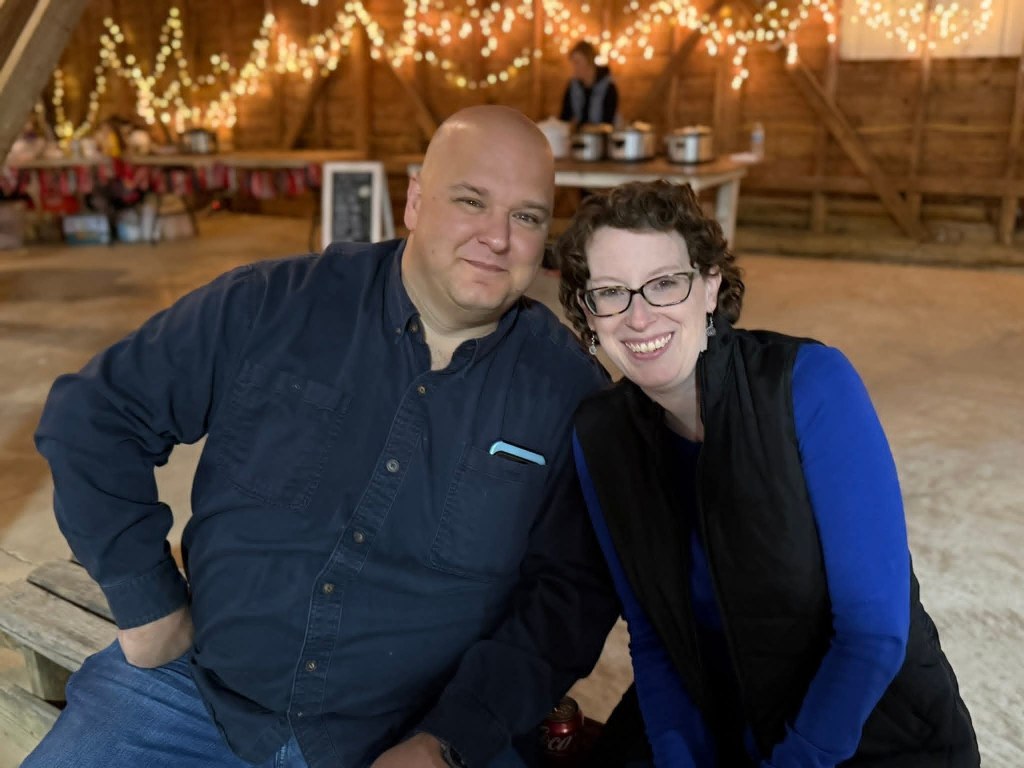
A pastor’s spouse is often a pillar of the community, speaking and ministering on behalf of the church. Katie Fordham embraced this role at Oak Bowery Church in Ohatchee, Ala., along with raising her three school-age children.
At age 36, however, she was diagnosed with Parkinson’s disease. The tremors it caused soon threatened her everyday activities, but deep brain stimulation surgery made her condition manageable. Today, she’s a bearer of hope for others with Parkinson’s disease.
Diagnosis and early treatment
In early 2019, Fordham was passing out treat bags to recognize some of the local high-school football players in her church. She noticed a tremor for the first time, which was followed by symptoms such as mood changes and low energy. After several months of symptoms, her local doctor referred her to a neurologist in Atlanta who diagnosed her with young-onset Parkinson’s. It was a surprise given her age, but it was also a first step forward.
Parkinson’s disease is the second-most common neurodegenerative disorder in the country, affecting about one million Americans. It is progressive and associated with the gradual loss of cells that produce dopamine, a hormone that affects movement as well as psychological and emotional health.
The condition is known for motor symptoms such as tremors and difficulty walking, but it also can cause depression, sleep disruption, tiredness, and intellectual dysfunction. Only about 5-10% of cases are diagnosed before age 50, which is classified as young-onset Parkinson’s disease.
Fordham had watched her grandfather suffer from Parkinson’s later in life. “I knew what the journey could look like, and I had so many questions with three young children and a lot of responsibility,” she said.
She had what’s known as predominant tremor, meaning that her symptoms involved physical shaking and difficulty controlling movement. Fordham’s doctor prescribed some common medications meant to control tremors by replacing dopamine. Although they helped, steady dosage increases were prescribed at follow-up visits. At higher dosages, dopamine replacement therapies can cause dyskinesia (involuntary jerking or writhing), nausea, sleep disruption, and other side effects.
These medication side effects became overwhelming for Fordham. After six months of medication, her neurologist recommended the UAB Comprehensive Parkinson’s Disease and Movement Disorders Clinic for its specialized treatment and expertise. Harrison Walker, M.D., a clinical translational scientist in neurology and neurosurgery at UAB Medicine, became her treating physician.
Considering DBS
By the time of her second telehealth appointment, Fordham’s entire right side was affected by tremors, and her condition was progressing quickly. Based on the severity of her symptoms when off medication, Dr. Walker raised the possibility of deep brain stimulation (DBS), a surgical alternative to medication.
With DBS, an electrode is surgically placed in the region of the brain affected by Parkinson’s. The DBS system is completely under the skin and controlled remotely, acting like a pacemaker for the brain. It constantly and rapidly delivers electrical pulses to a specific location in the brain, in the hope of reducing abnormal movements.
“I was hesitant – because first of all, brain surgery is a scary concept – and also, it just seemed so early in my journey,” Fordham said. “And I knew that most people waited five years to have it.”
She gradually decided to try it after reviewing research suggesting that early DBS could be especially helpful for those with early-onset Parkinson’s.When she was approved for the surgery in January 2021, Fordham also volunteered to participate in a study that required additional testing during and after the procedure. The study’s goal was to identify the most effective DBS settings using new electrode designs that can more precisely deliver electrical current to the brain.
Unforgettable moment
Her surgery was performed on Feb. 1, 2021. During DBS surgery, patients often remain awake while thin electrodes are placed on the brain through a small opening in the skull, allowing the care team to test the patient’s response to stimulation. Fordham says being awake to see her life change in an instant was unforgettable.
“After two years of constant involuntary movement, I couldn’t believe how peaceful it was to be suddenly still when they turned it on,” Fordham said. “And of course it was very emotionally charged for me and my husband.”
After a night in the Neurological Intensive Care Unit, she was back home with an immediate improvement in physical symptoms and greatly reduced medications. Over the next year, she returned to UAB Medicine four times for follow-up care and fine-tuning of the electrode programming.
A return to serving
DBS was the beginning of many positive changes in Fordham’s life. She worried less about her medication schedule when planning activities. She also had higher energy levels and endurance for socializing and teaching, and she was able to consider travelling again.
More importantly to Fordham, she was able to serve her community again. About six weeks after the surgery, a devastating tornado hit the region, and her husband’s church became a disaster relief hub for several small rural communities. It required a level of involvement that would’ve been impossible just a couple of months earlier.
“They counted on us for eight months to organize relief and answer questions,” Fordham said. “Early on, we were fielding 150 calls per day as well as emails and texts.”
Like many other patients, Fordham did experience increased symptoms on the side of her body not addressed by the first DBS procedure. So, in March 2022, she underwent DBS on the other side of her brain, which led to further decreases in medication. “I’m the best me I can be with Parkinson’s,” she said.
As one of relatively few people with young-onset Parkinson’s, Fordham says she feels a special responsibility to help others with the condition. She co-leads UAB Medicine’s newest virtual Parkison’s disease support group, called PD THRIVE. “I want people to know that there is hope, and life after diagnosis – it’s not the end of the road.”